Over the past few weeks I’ve been pulling together all of the information that we need for the building permit. To make things a bit easier, King County has pulled together all of the information that we need in a nice little Residential Building Permit Checklist. This checklist plus a lot of other useful information can be found on their website.
That said, it’s pretty extensive, and multiple copies are needed of multiple things. With our septic design submitted to King County Health Department on September 16th, there was really only a couple things left to be completed for me to meet with the Building Department: energy form and drainage design. The energy form (insert link) was pretty straightforward, and after calculating all of the door & window openings, I passed it along to Ruttan Construction to figure out all of the U-factors and energy ratings for materials. Normally, architects fill out this form, but since ours didn’t spec out the type of windows & doors to be used (only the sizing), our contractor had to fill this out for us.
The site drainage design was pretty easy as well, but I think being a civil engineer really helped me out here. Realistically I read through the King County Stormwater Design Manual and just followed their procedures. They have flowcharts that walk you through key steps that let you know what type of drainage review you’ll need to do. From what I gather from our builder and others in the area, you really want to have a small drainage design (not a full drainage review). The full drainage review is a pretty lengthy and much more expensive process…and you’d need to get a civil engineer to stamp the design (obviously that part wouldn’t have been a problem for me). Nevertheless, I’d rather invest our money elsewhere than in installing drainage features (which likely would have ended up being a stormwater pond). To qualify for a small drainage review, I needed to tweak some of our total impervious surface area to be less than 10,000 square feet. That, coupled with our property having greater than 65% of the property size as native vegetation kicked us to the small drainage review criteria. Using the information in the small drainage review, you need to select which Best Measurement Practices “BMPs” that you want to use on your site. I used sheet flow for the driveway & back patio, drywells for the footing drains, and dispersion trenches for the downspouts.
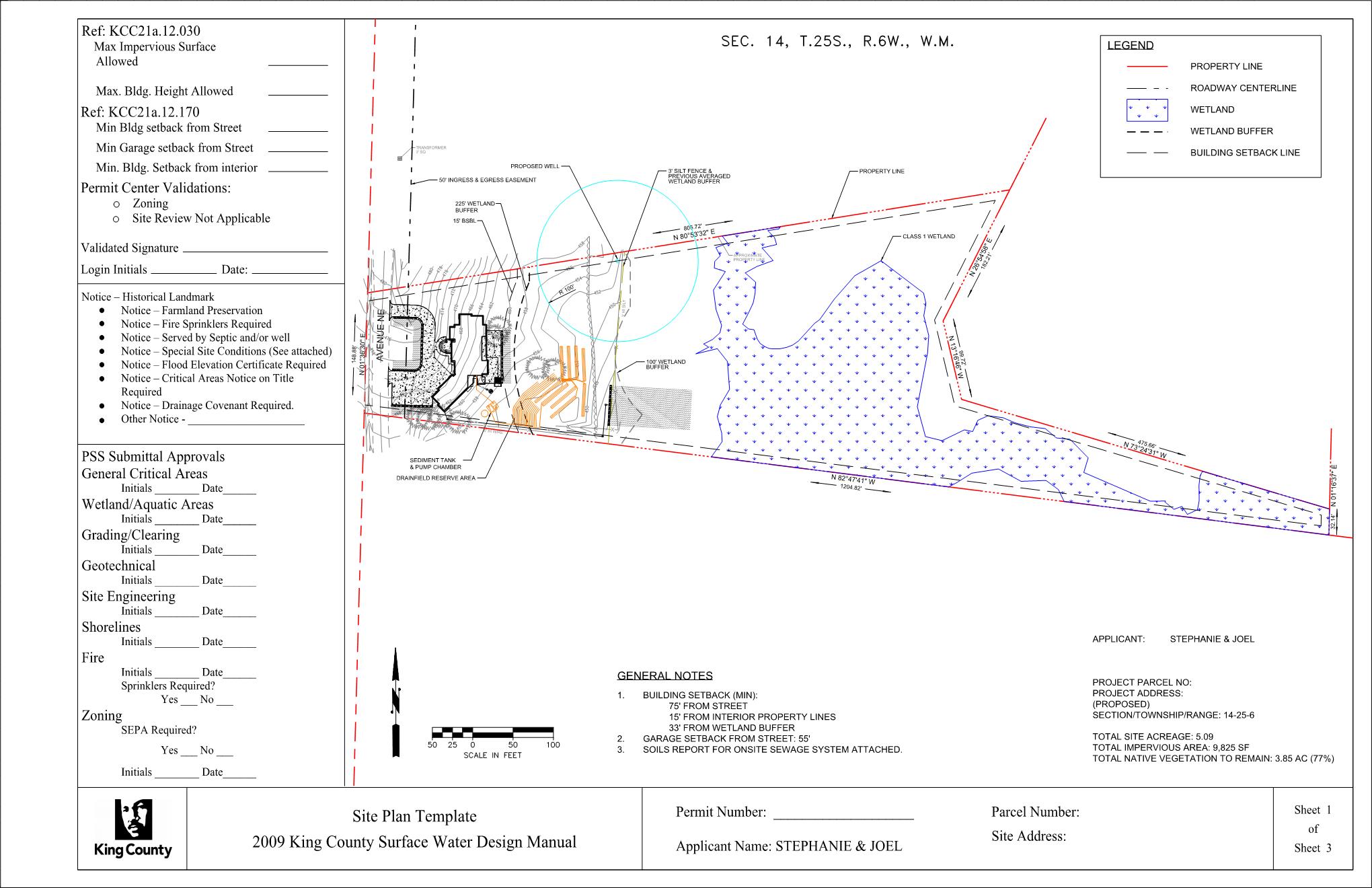
Initial Site Plan – Sheet 1
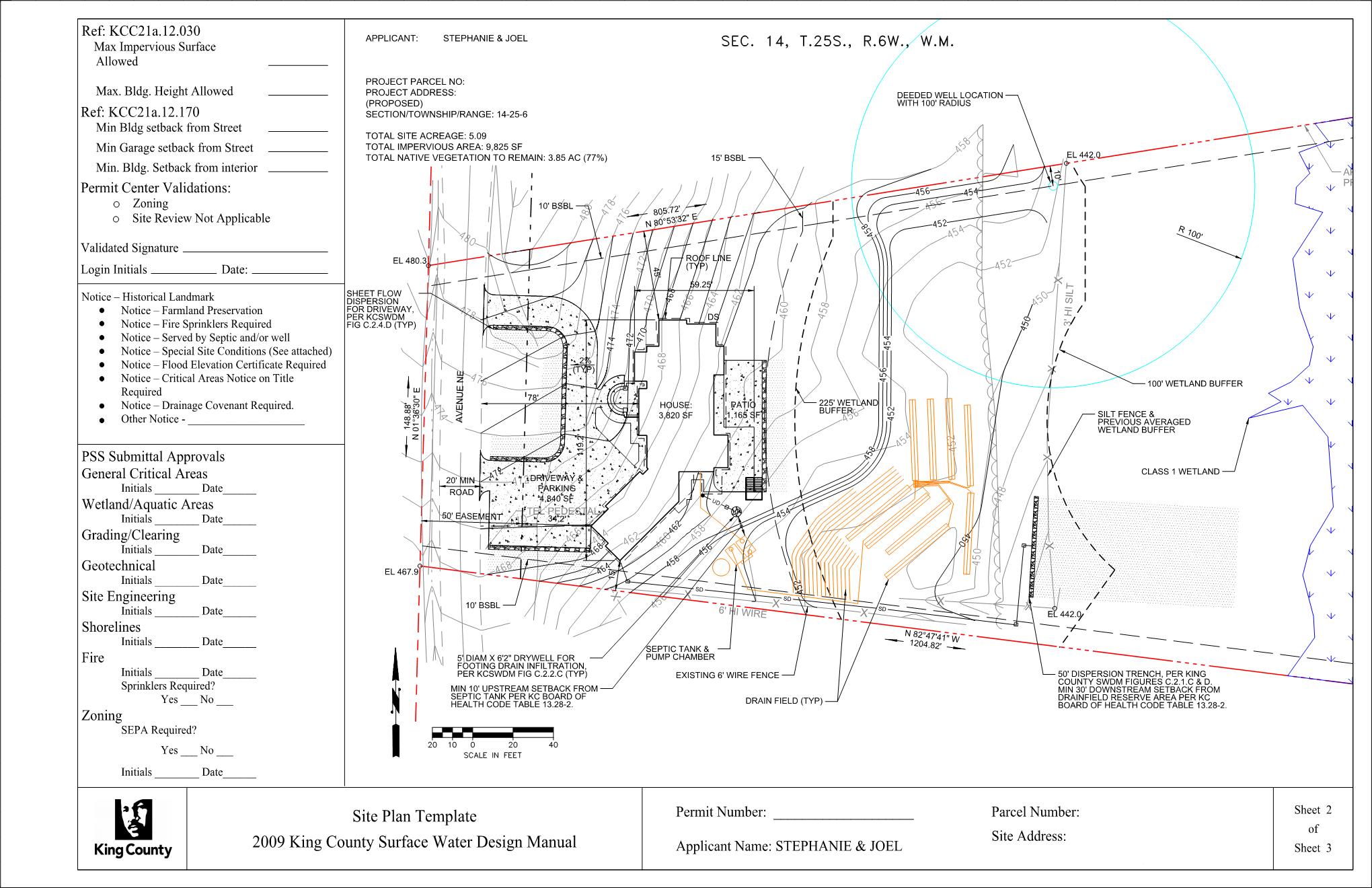
Initial Site Plan – Sheet 2

Initial Site Plan – Sheet 3
With the drainage design now done, I gathered up all of my information, grabbed a Starbucks and headed in to King County this morning at 7am when they opened. I’m not sure why, but I was pretty nervous to go in for the pre-submittal meeting. I really wasn’t sure what to expect, and depending on who you get from the County to help you, I’ve heard that it can either go pretty smoothly or pretty awfully. Luckily, I had a woman named Mai helping me and she was pretty great. She walked through all of the information that I had, and even printed out some information that I should have brought in (I emailed it to her from my dropbox account from my phone (gotta love dropbox)! She basically did the initial screening and then called on each department to come talk with me and make sure that I met their requirements – drainage, fire safety, critical areas, and structural.
Everything for our property seemed good, except for one thing – the ingress and egress. A new criteria that the county is making applicants prove is legal ingress and egress. This is especially important on properties like ours where cross over easements to reach our property. They told us that we needed to go back home, research and find all of the easements from on our neighbor’s properties that tell us we can legally get to our property. This is interesting since apparently easements may not transfer with the sale of a property – in fact, they could be deeded to a specific person. And if we couldn’t find all of the recorded easements, we would need to purchase easements from the neighbors before we could turn in our submittal for our building permit.
Besides the ingress & egress easements, we also found out that we’ll need to have a sprinkler system in our house. This is because our house is pretty wide and a fire hose can’t reach all the way around our house…one of the requirements in order to not have a sprinkler system.
 Coastal Hues